




You may also like…








$36.95
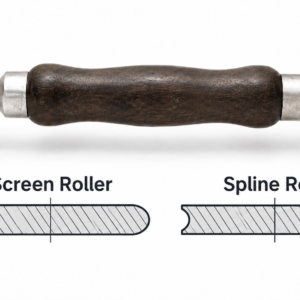
Double-ended spline roller with steel or plastic wheel options. Choose the wheel size that matches the spline used in your screen project.
99999999 in stock
A hardwood-handled rolling tool for contractors, repair professionals, and DIY screen projects.

Designed for daily, frequent use in repair shops and on contractor re-screening jobs.
Use controlled pressure and check suitability for the mesh and frame finish.
Suitable for occasional, infrequent use, including DIY projects and residential screen repairs.
Helps reduce marking when the wheel and channel are clean and correctly matched.
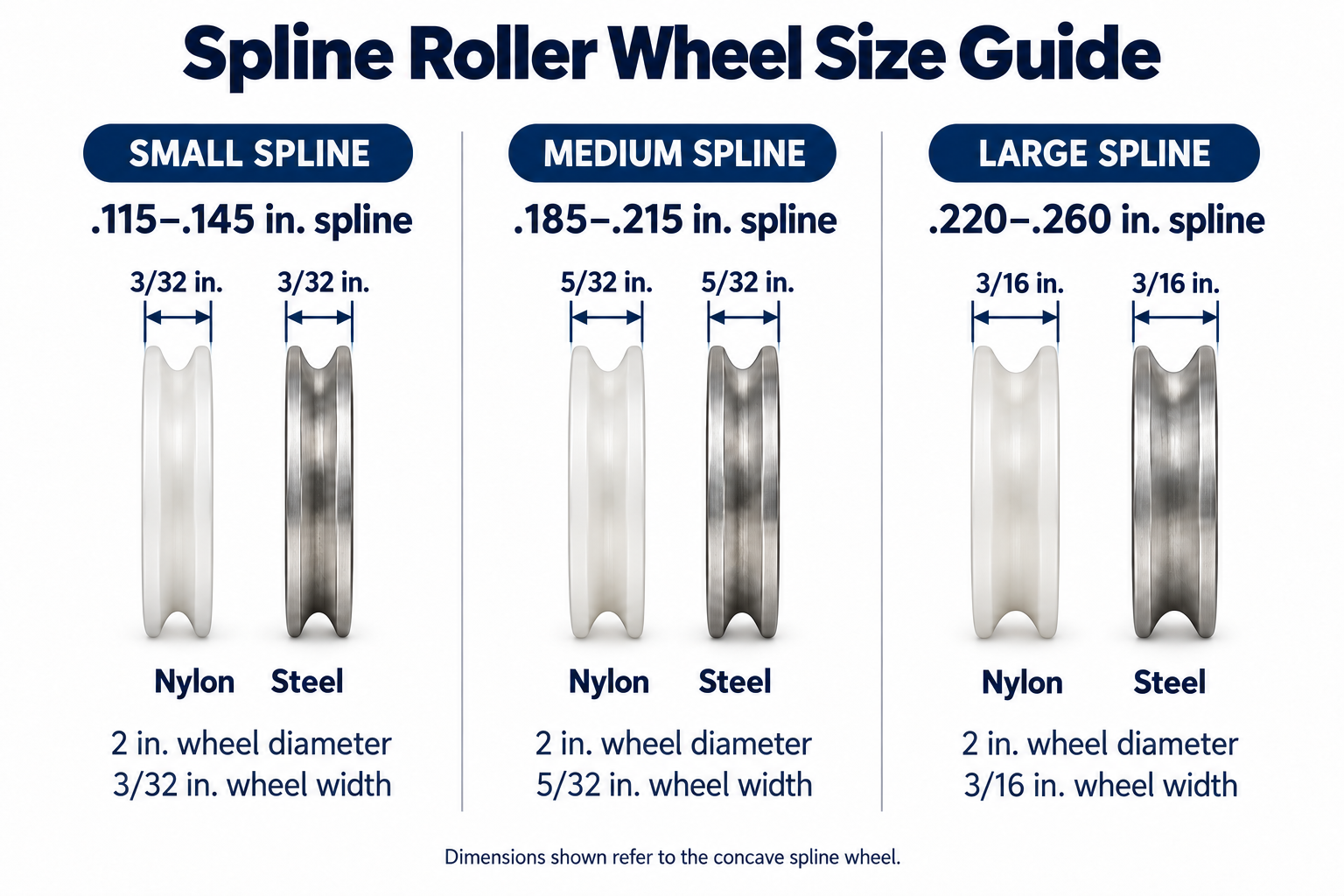
Select the range that includes your spline size, then confirm the wheel fits the frame channel.

Support the frame on a flat surface and lay mesh over the opening. Where recommended for the material, use the convex wheel to gently pre-form it into the groove.
Place the correctly sized spline into the channel. Switch to the concave wheel, keeping its groove centered over the spline.
Use steady, controlled pressure until the spline is seated. Check for even tension and frame bow before trimming excess mesh.
| Handle | Solid hardwood |
| Wheel options | Steel or nylon |
| Recommended use | Steel: daily, frequent use · Nylon: occasional, infrequent use |
| Configuration | Dual end: convex mesh roller + concave spline roller |
| Spline ranges | .115″–.145″ / .185″–.215″ / .220″–.260″ |
| Wheel diameter | 2 inches, per supplied size guide |
| Concave wheel widths | Small: 3/32″ · Medium: 5/32″ · Large: 3/16″ |
| Applications | Window and door re-screening; confirm tool, spline, and mesh compatibility before use. |
Choose steel for daily, frequent use. Nylon is suitable for occasional, infrequent use and offers gentler contact with finished frames. Either option requires the correct fit and controlled pressure.
Select the wheel range that covers your spline diameter. Check channel clearance and tracking on a short section before completing the screen.
Installation methods vary by material and frame system. Follow the mesh and frame manufacturer’s instructions, especially before pre-forming mesh with a convex wheel.
We don’t offer installation services, but we provide clear guidance and ongoing support to help you install your new screen door with confidence.

Supplier & Manufacturer of replacement window screens, solar screens, parts, tools & kits since 1979.
© 2026 Quality Window Screen Co. All rights reserved.